Kalanamak RiceRooted in heritage. Served with love
कालानमक चावल
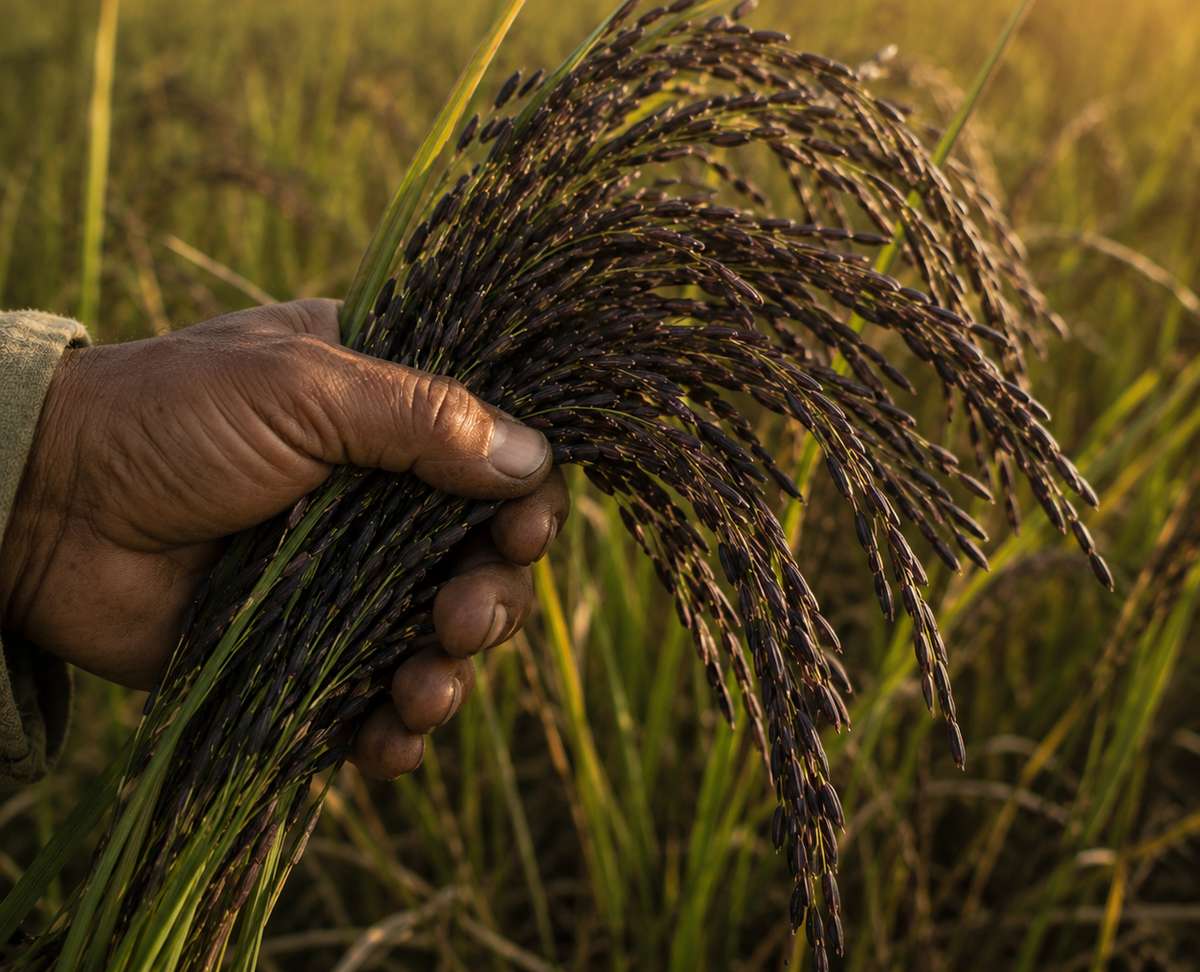
Kalanamak Rice from the Terai, grown for its distinctive aroma and nutrition. Minimally milled close to the farm and never polished.
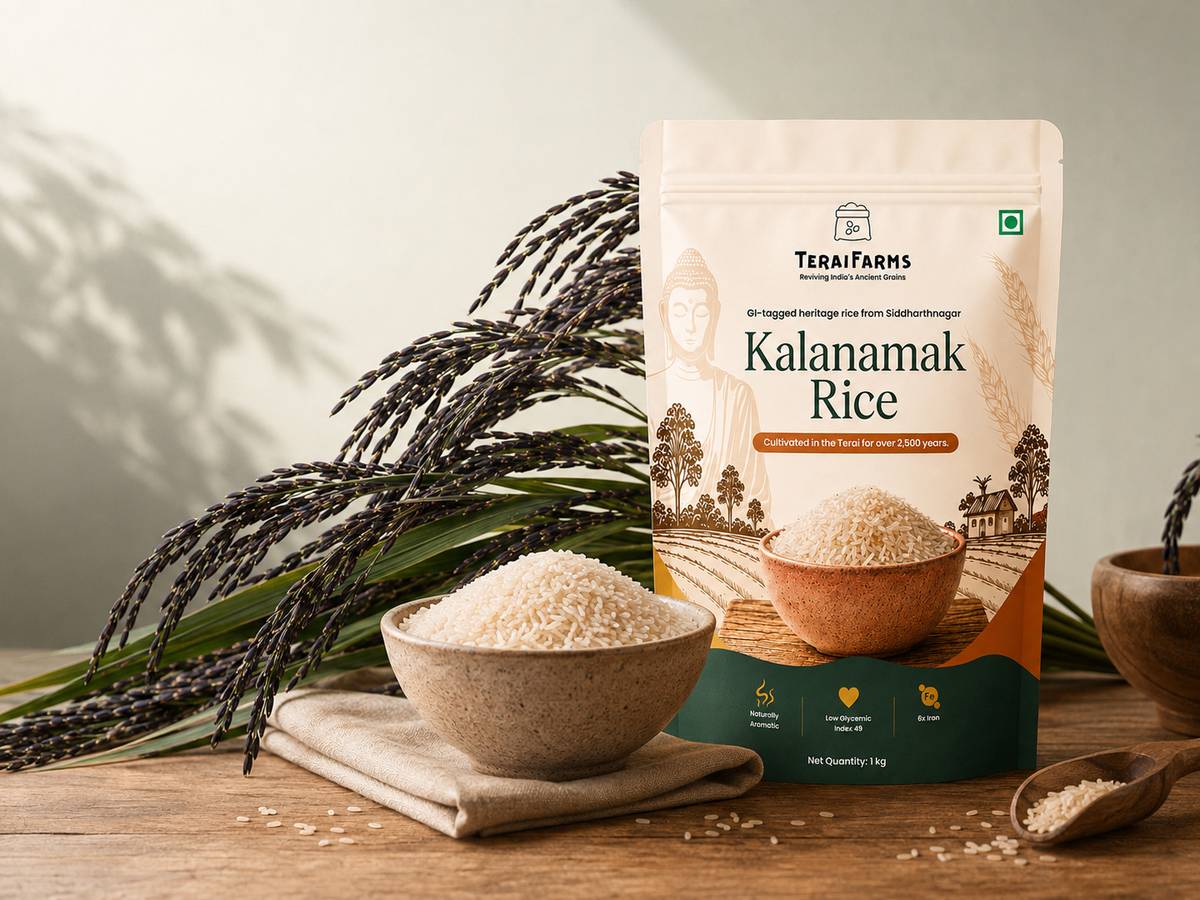
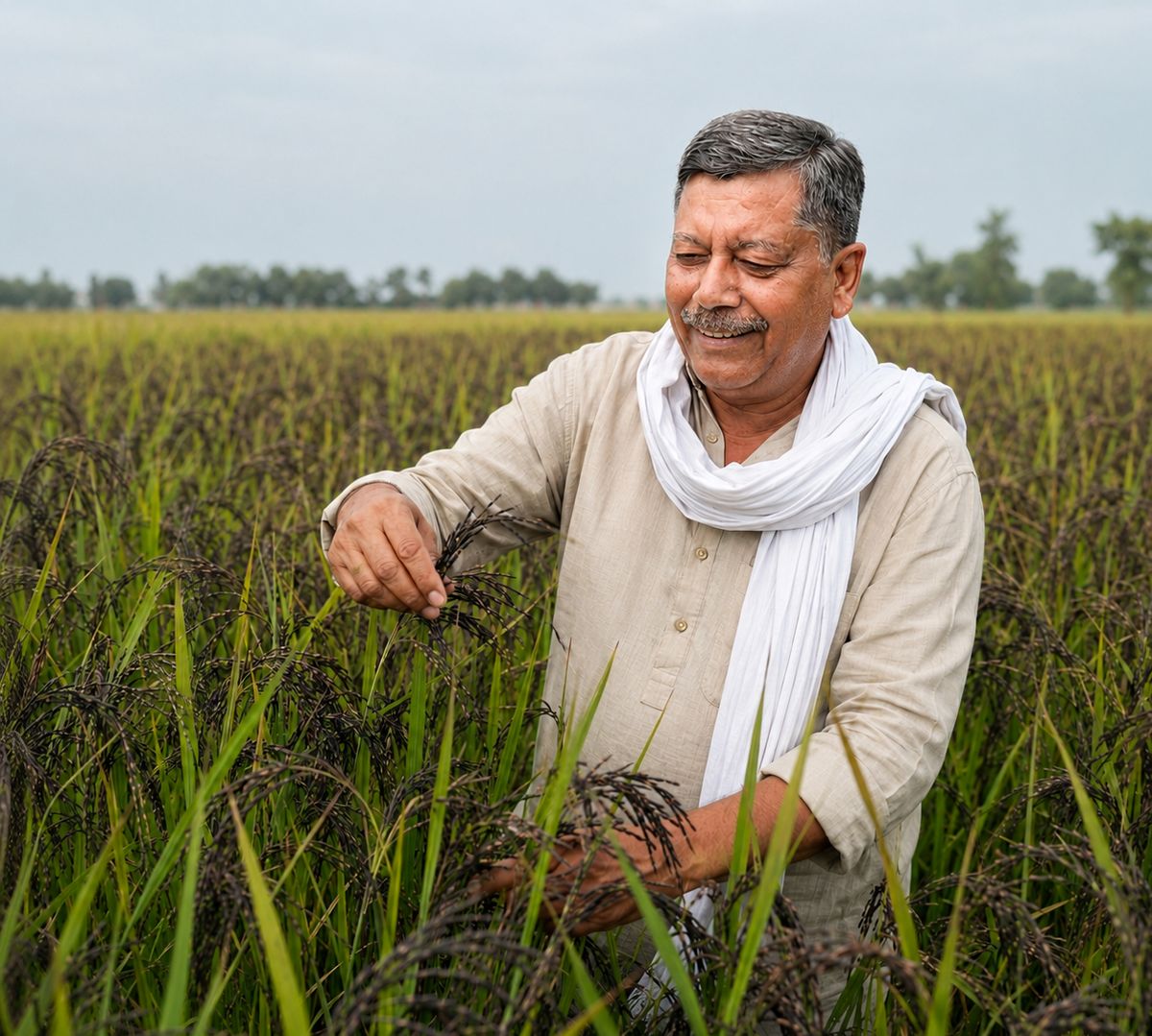
Grown in Siddharthnagar, milled beside the fields.
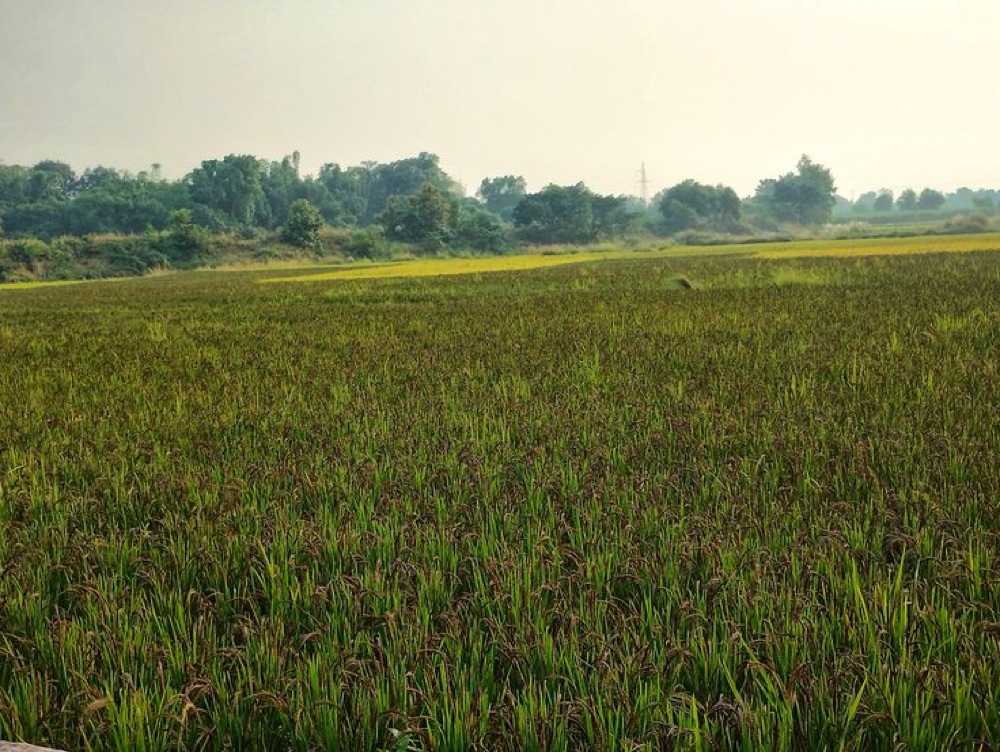
Kalanamak grows in eleven districts of eastern Uttar Pradesh and nowhere else on earth. The GI registry says so.
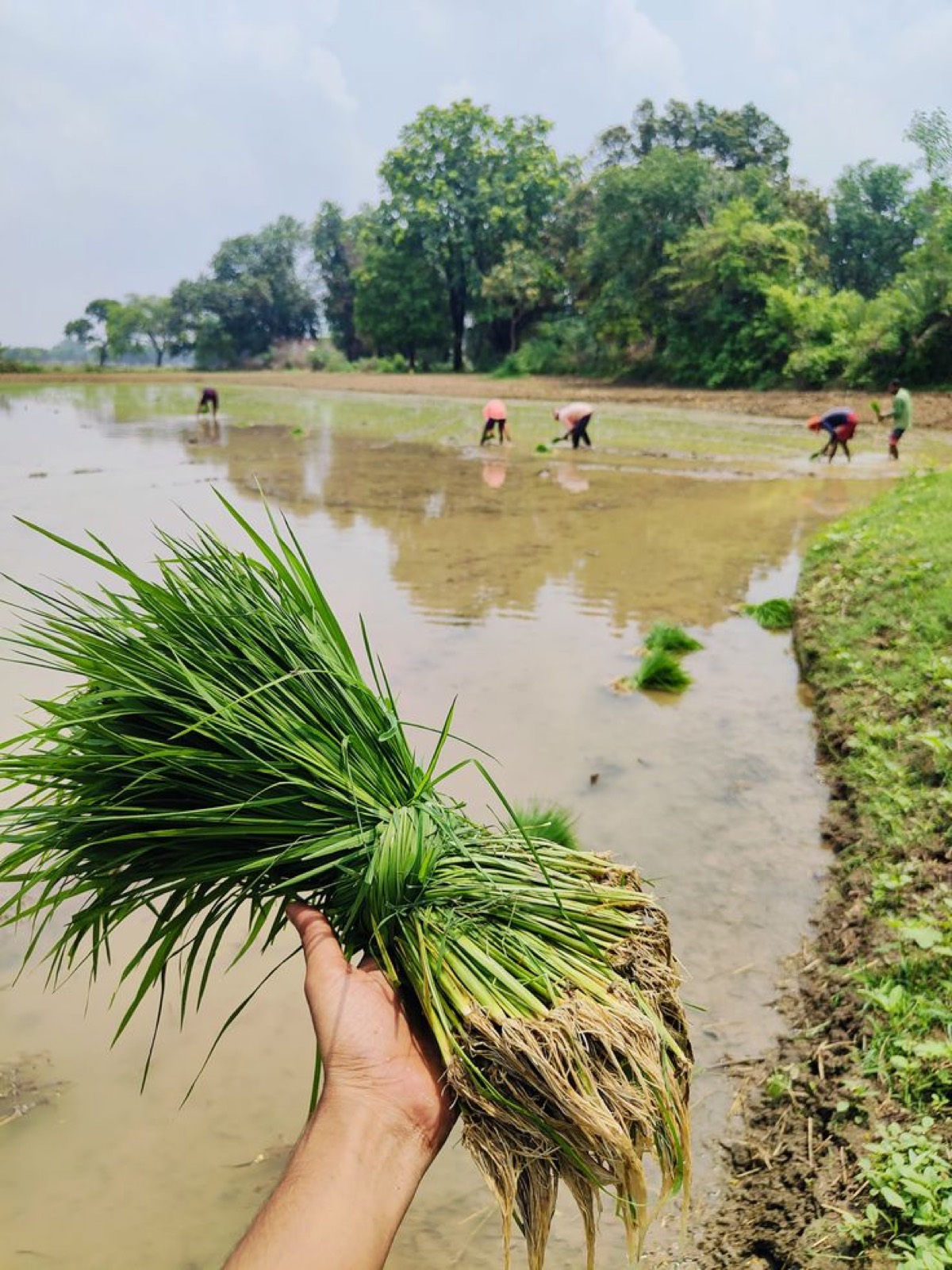
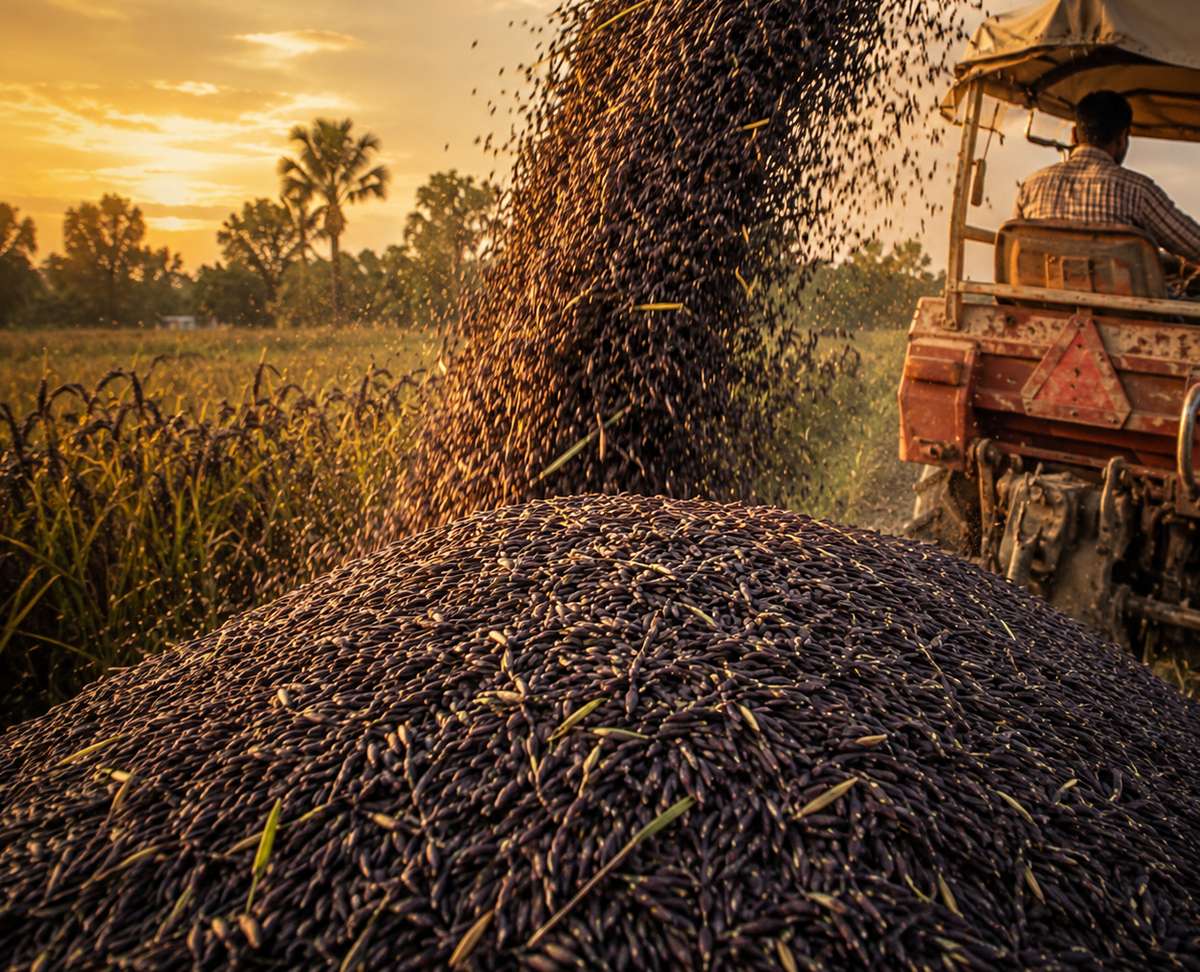
We buy from FPOs and smallholders in Siddharthnagar and Gorakhpur, and we pay them a fair price for it. That fair price is the entire point: it is what lets a farmer choose a 140-day heritage crop over a 100-day hybrid and not lose money for it.
Milling happens near the fields, at low heat, because hot milling burns off the oils that carry the aroma. Vacuum-sealed the same week. Nothing sits in a warehouse waiting for a buyer.
Same bowl of rice. Half the sugar spike, six times the iron.
Kalanamak's glycaemic index is 49–52. White basmati's is 71–77 — basmati spikes your blood sugar much faster. It also packs about 3.1 mg of iron per 100 g, six times basmati's 0.5. That's from ICAR's rice research and the ICMR-NIN food tables, not us.
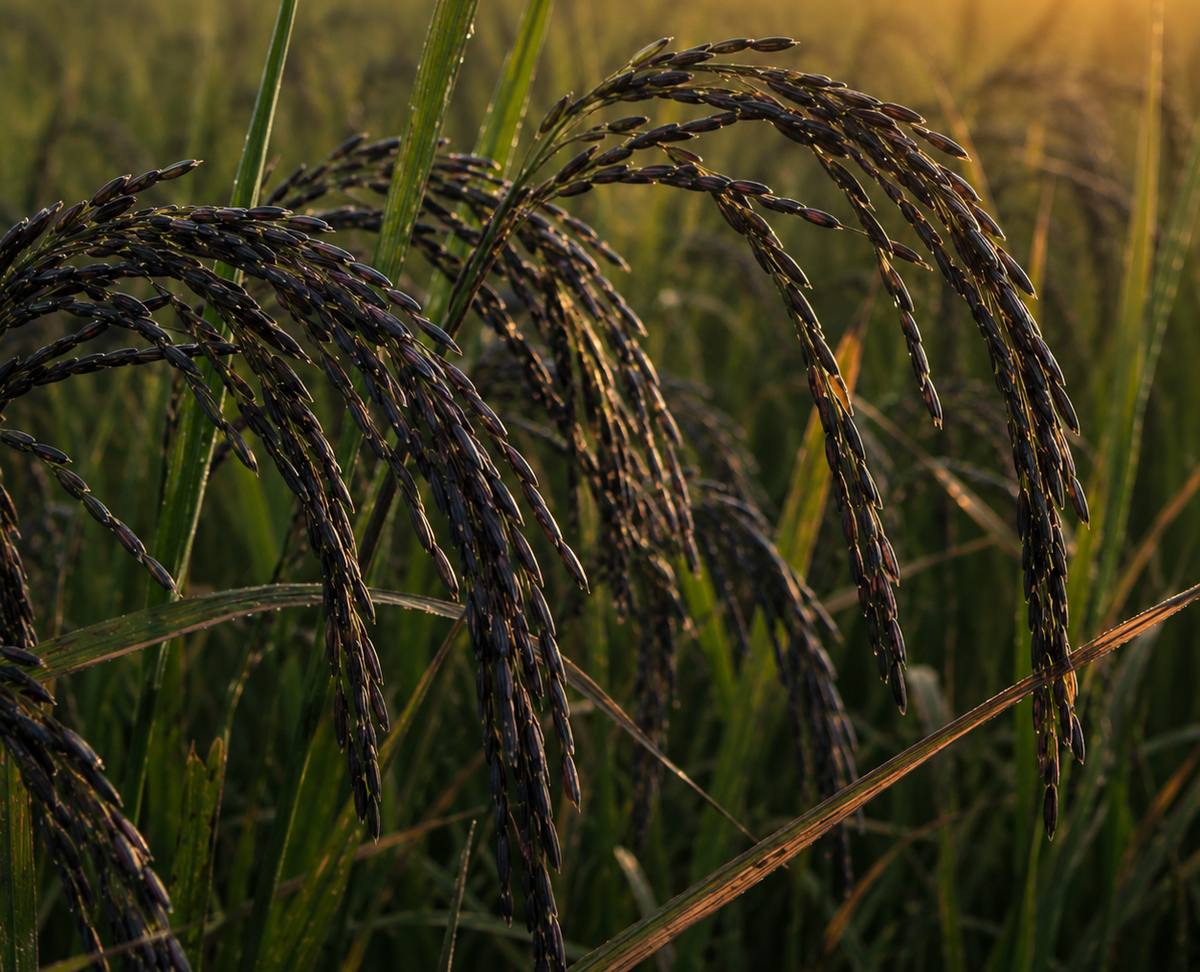
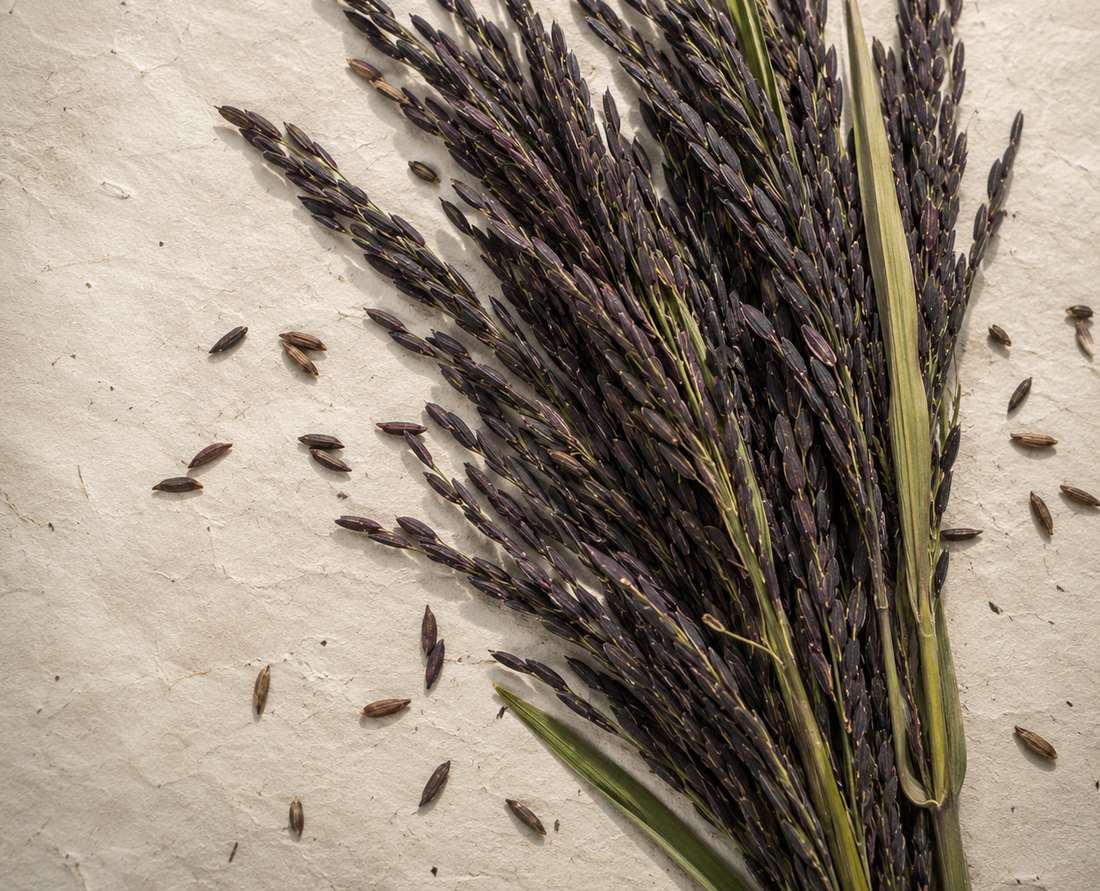
The reason: bran. Kalanamak keeps its dark outer layer, where the iron and minerals live; basmati's high-polish milling strips it away for a whiter grain.
| Per 100 g / trait | Kalanamak | White basmati |
|---|---|---|
| Glycaemic index | 49–52 | 71–77 |
| Iron / 100g | 3.1 mg | 0.5 mg |
| Aroma | The grain's own | Usually added |
| Milling | Low-heat, bran kept | High-polish |
| Traced to farm | Yes, by batch | No |
| Days to mature | 140–150 | 90–100 |
Sources: ICAR–NRRI · ICMR-NIN Indian Food Composition Tables (2017) · GI Registry. See the full breakdown →
One thing about Kalanamak rice.
Most rice grown in India is a hybrid — ninety days from sowing to harvest, then the field gets planted again with wheat, or a pulse, whatever pays. Kalanamak doesn't work that way. It's a slow crop, and there's no rushing it.
That extra time is where the grain actually earns its reputation. The aroma builds slower. The starch structure that keeps blood sugar steady takes longer to form. Even the protein content depends on those extra weeks. Cut the growing season short and you get ordinary rice with a heritage name stuck on it.
Which is also why the price makes sense. A farmer who grows Kalanamak gives up an entire second crop for the year — no wheat, no pulse, nothing. So when you see it selling for ₹120 a kilo somewhere, ask what's actually happening. Either it isn't real Kalanamak, or the farmer's being paid so little they'll go back to hybrid rice next season. We priced ours so that doesn't happen.
Free delivery above ₹999.
Roughly 13 plates to a kilo. About ₹35 a plate.
- ✓7-day quality guarantee. Open the pack. If the aroma isn't there, message us and we replace it or refund you. No return shipping.
- ✓Delivered in 1–7 days. 1–3 days across Delhi NCR, Mumbai, Bengaluru, Hyderabad and Lucknow. 4–7 days elsewhere in India.
- ✓Vacuum-sealed at source. Triple-layer oxygen barrier, 12-month freshness, sealed the same week it's milled.
What people say.
“The smell hit me before the lid came off. Reminded me of my grandmother's kitchen in Gorakhpur.”
Anjali R. · Delhi NCR“Low GI rice that actually tastes like rice. We've switched our family's daily dal-chawal to this.”
Dr. Mahesh K. · Bengaluru“I cook biryani for a living. This rice holds its shape, doesn't break, and the aroma is unforced.”
Imran S. · LucknowStart with one kilo.
Open the pack — if the aroma isn't there, we replace it or refund you within 7 days. Nothing to ship back.